Digitizing shop-floor audits: a guide to moving from paper to mobile
Inconsistent grids, retyping, late reports: how to structure mobile audits that produce usable data as soon as the visit ends.
Industry X.0 team7 min read
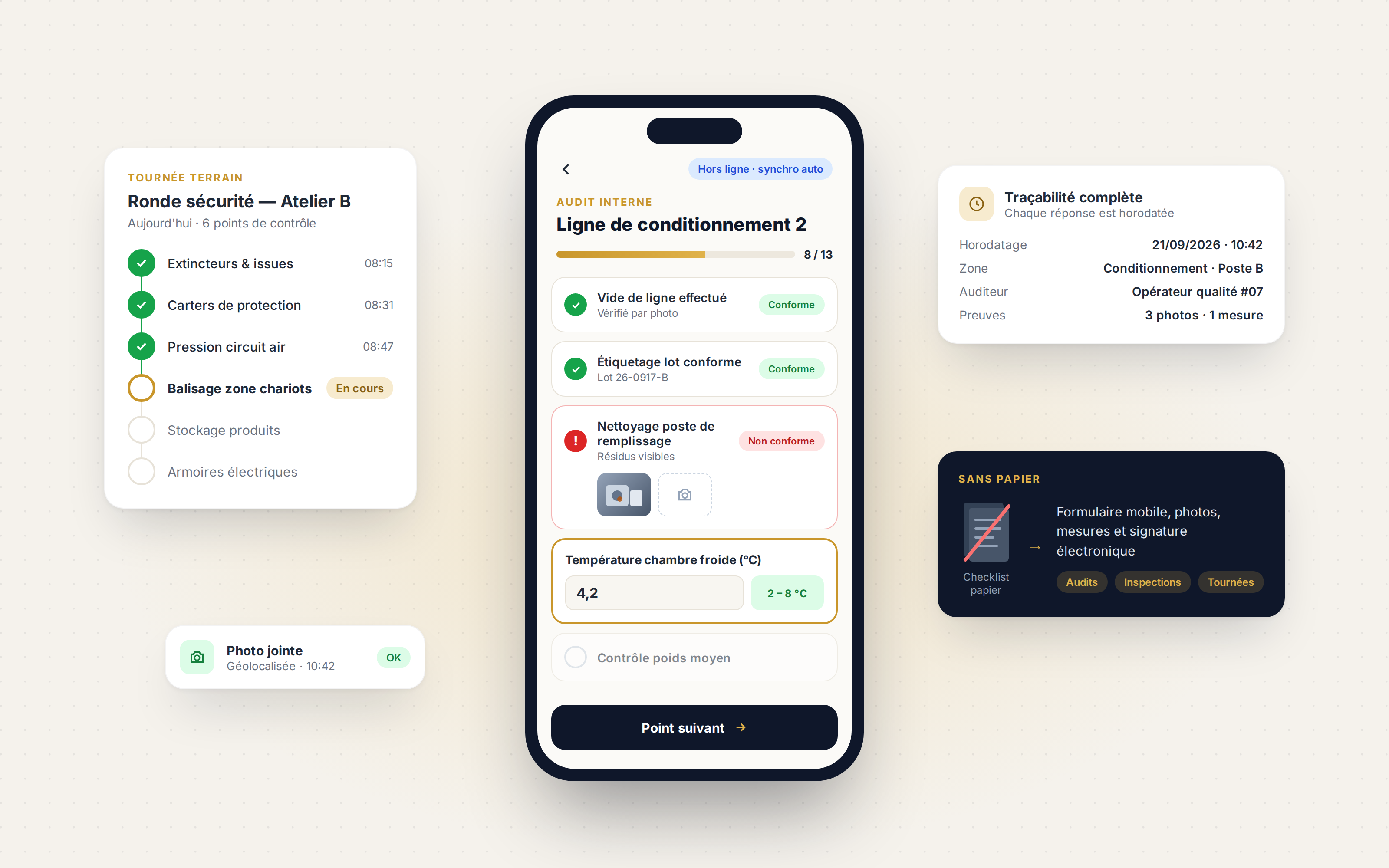
In many plants, the shop-floor audit is still a two-step exercise: findings are noted on paper or in a spreadsheet, then retyped, formatted and sent out. In between, the information loses accuracy, freshness and sometimes completeness. Digitizing the audit does not mean swapping paper for a tablet: it means making the data accurate and usable at the very moment it is collected.
Signs of an audit that is not pulling its weight
- Each auditor uses their own version of the grid, with their own criteria.
- Findings are retyped after the audit, with transcription errors.
- The report goes out several days after the visit, when the deviations have already changed.
- A finding raised in one audit is forgotten in the next.
Taken one by one, none of these is dramatic. Together, they make any reliable comparison impossible — from one audit, area or site to the next.
1. Standardize the grid before choosing the tool
The first task is about method. Gather the existing grids, identify the common criteria and give each one a clear definition, a response type (compliant / non-compliant, measured value, choice from a list) and, where relevant, a tolerance threshold. A shared, versioned grid is what makes two auditors reach the same result in the same situation.
2. Capture the evidence when the finding is made
On mobile, every checkpoint can carry its evidence: a photo, a measurement, a comment. Linked to the item checked, time-stamped and located, that evidence avoids photos scattered across personal phones and after-the-fact debates about what was actually observed.
Also think about areas with poor network coverage: an offline mode, with automatic sync when the connection returns, is essential in most workshops.
3. Turn every finding into an action
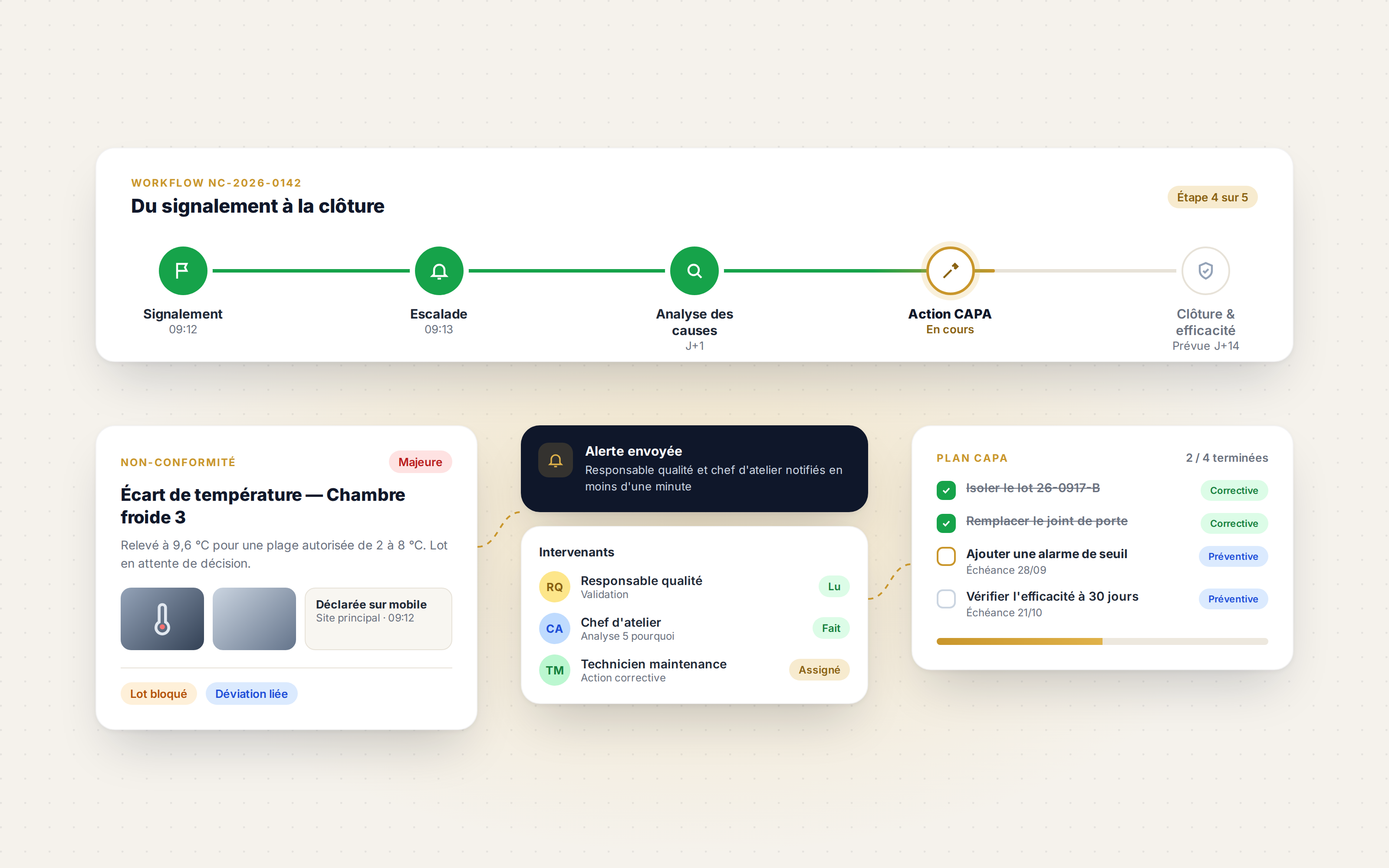
An audit is only worth what it triggers. Every non-conformity raised must be able to become an action, with an owner and a due date, tracked until it is closed. This direct link between the shop floor and quality handling is what stops the same findings from coming back audit after audit.
4. Generate the report without writing it
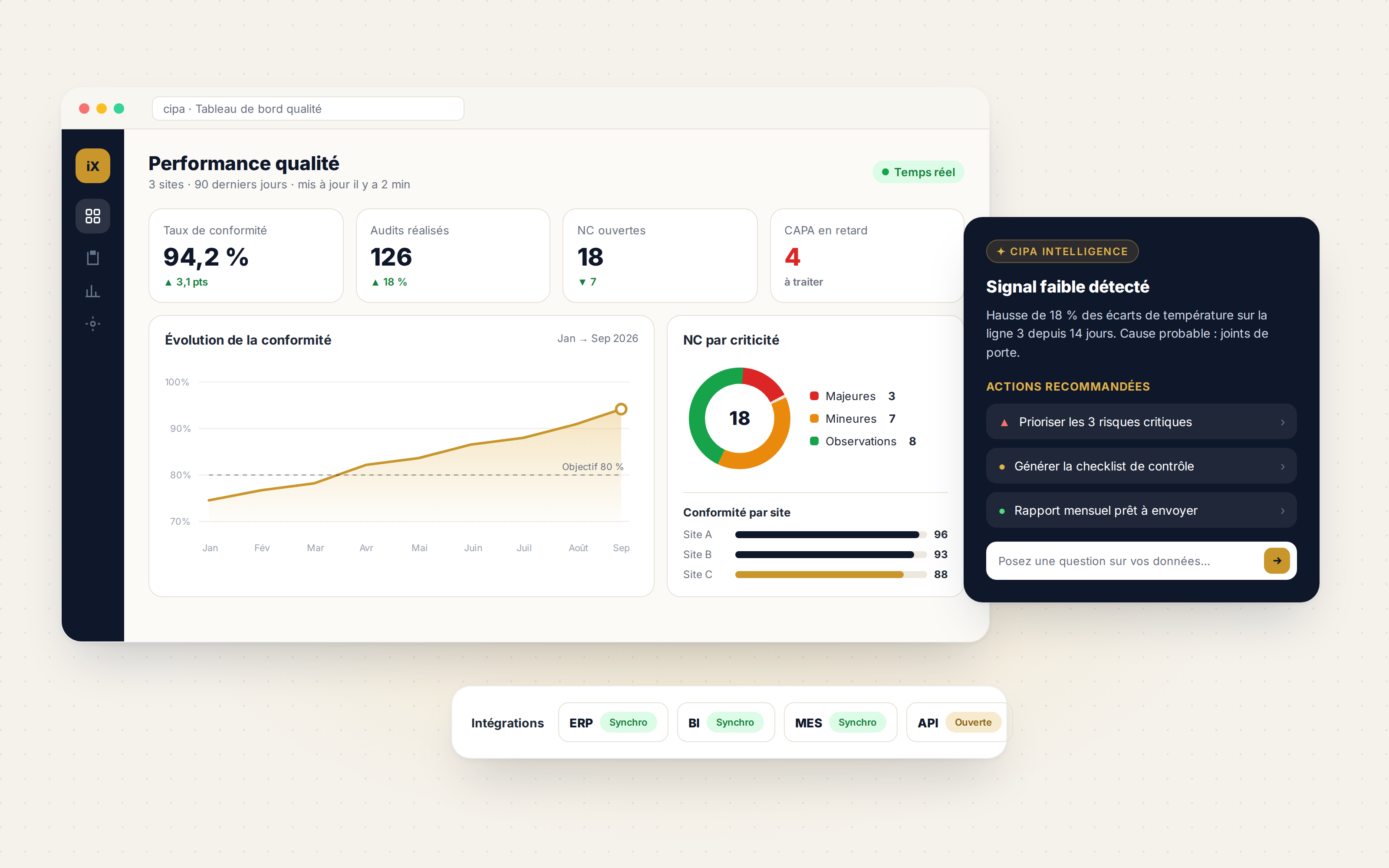
When data entry is structured, the report is no longer a document to write: it is generated as soon as the audit ends, with the findings, the evidence and the open actions. It can be sent immediately to the managers concerned, then archived for future audits.
Where to start
- Pick a frequent, well-understood type of audit (5S, safety, hygiene).
- Align its grid with the auditors who use it.
- Deploy on one area or line for a few weeks.
- Measure the time saved on writing and the faster response to deviations, then extend.
.png&w=3840&q=75)