Running a successful industrial digitization pilot in a few weeks
Start small, prove the value, then extend: how to choose the right pilot scope, bring shop-floor teams on board and decide what comes next based on facts.
Industry X.0 team6 min read
.png&w=3840&q=75)
Digitization projects that fail often have one thing in common: they tried to cover everything at once. A pilot approach, by contrast, shows value quickly on a controlled scope before scaling up with confidence.
1. Choose a high-value, well-bounded process
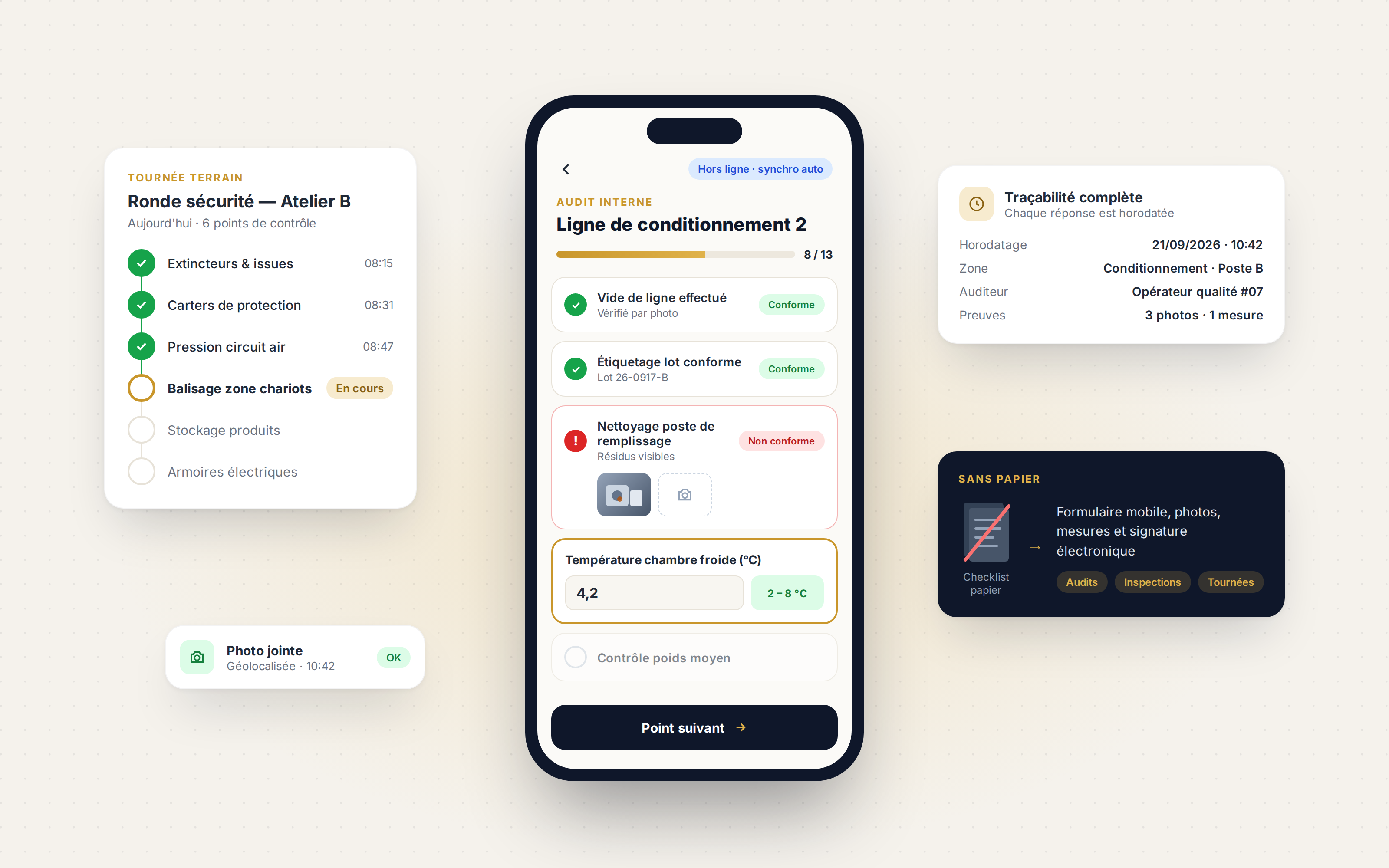
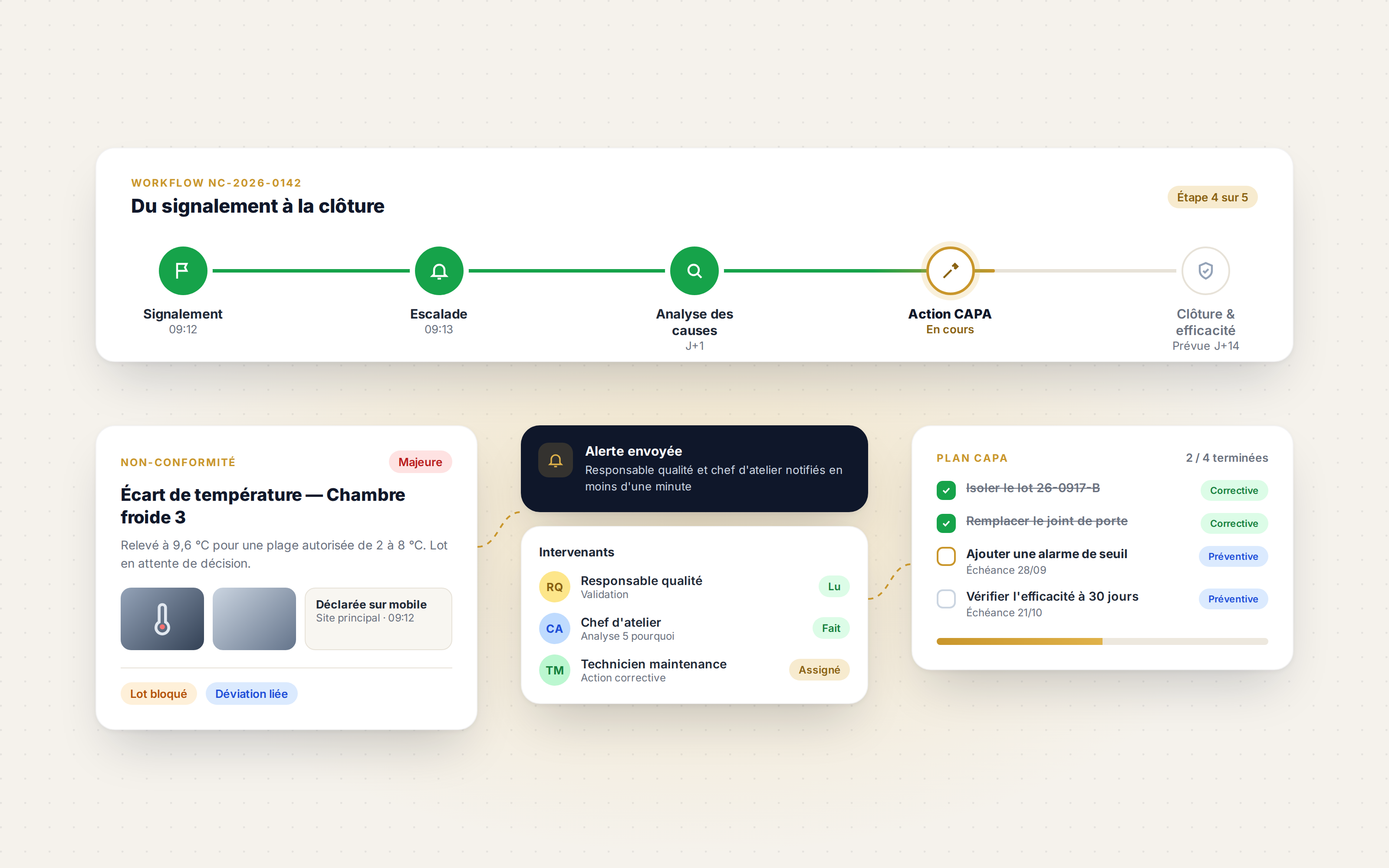
The right candidate is a frequent process that is painful today and whose result can be measured: audits, inspections, non-conformity management or production checks. Avoid rare processes or ones that depend too much on other ongoing projects.
2. Set success criteria before you start
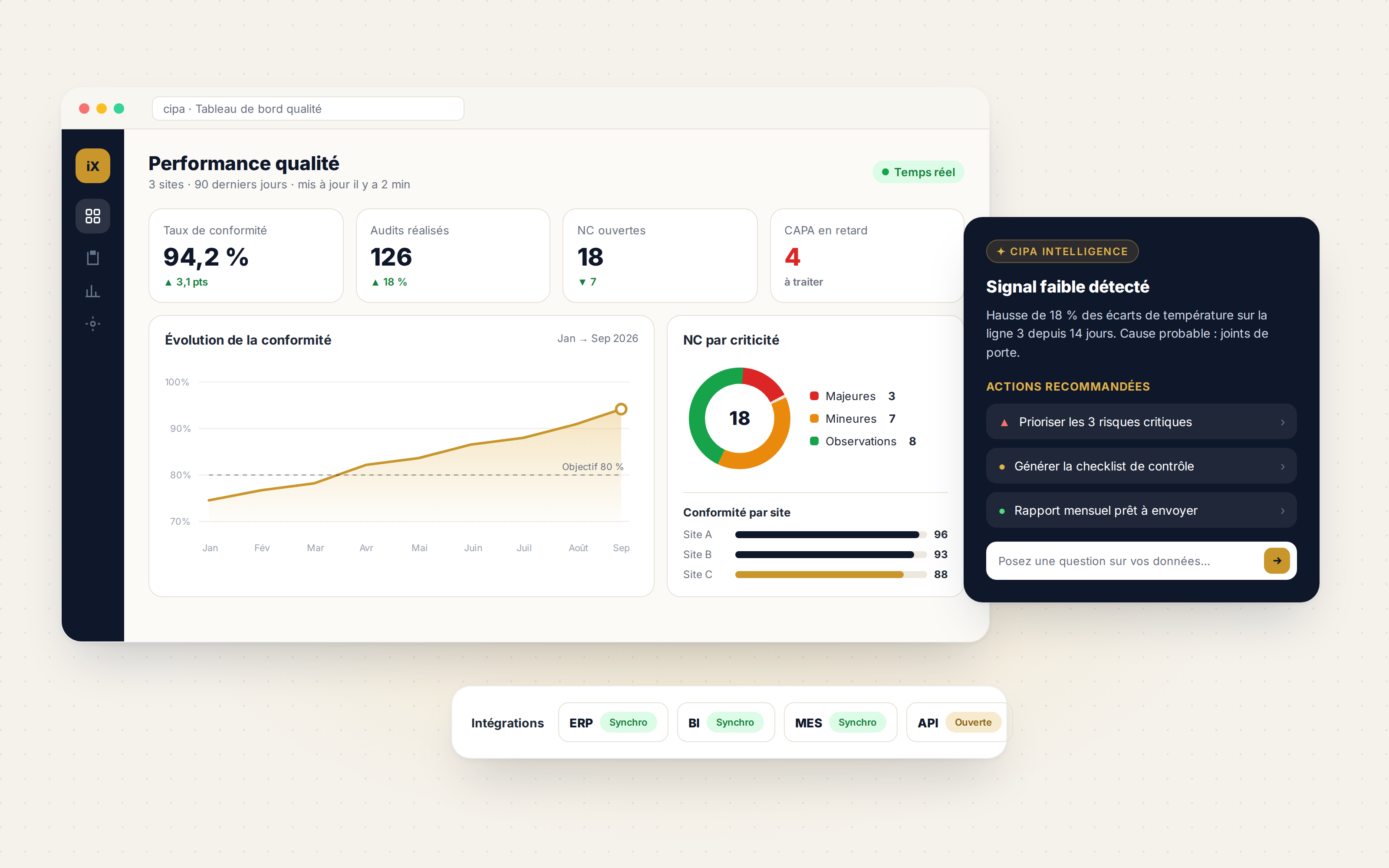
- Time spent per audit or per check, before and after.
- Time between detecting a deviation and handling it.
- Share of findings turned into tracked actions.
- Buy-in from shop-floor users, measured by actual usage.
3. Involve the shop floor from configuration onward
The operators and auditors who will use the tool every day should help build the checklists. It is the best guarantee that the tool fits the reality of the workshop, and the best way to make it their tool rather than one imposed on them.
4. Support, train, adjust
A pilot is not a passive test. Plan a short training at the start, regular check-ins with users and the ability to adjust grids and processes quickly. The first pieces of feedback are the most valuable.
5. Decide what comes next based on facts
At the end of the pilot, compare the results with the criteria set at the start. If they are met, the rollout is planned process by process, site by site, reusing what has been built. If they are not, you know exactly why — and that is a result too.